
The correct operation of the braking and clutch systems depends directly on their hydraulics. At BSF, we offer one of the most comprehensive brake and clutch hydraulic ranges on the market, with a stock availability rate above 97% to ensure immediate availability and uninterrupted service to the professional.
BSF Automoción S.A. | Brake system specialists since 1986
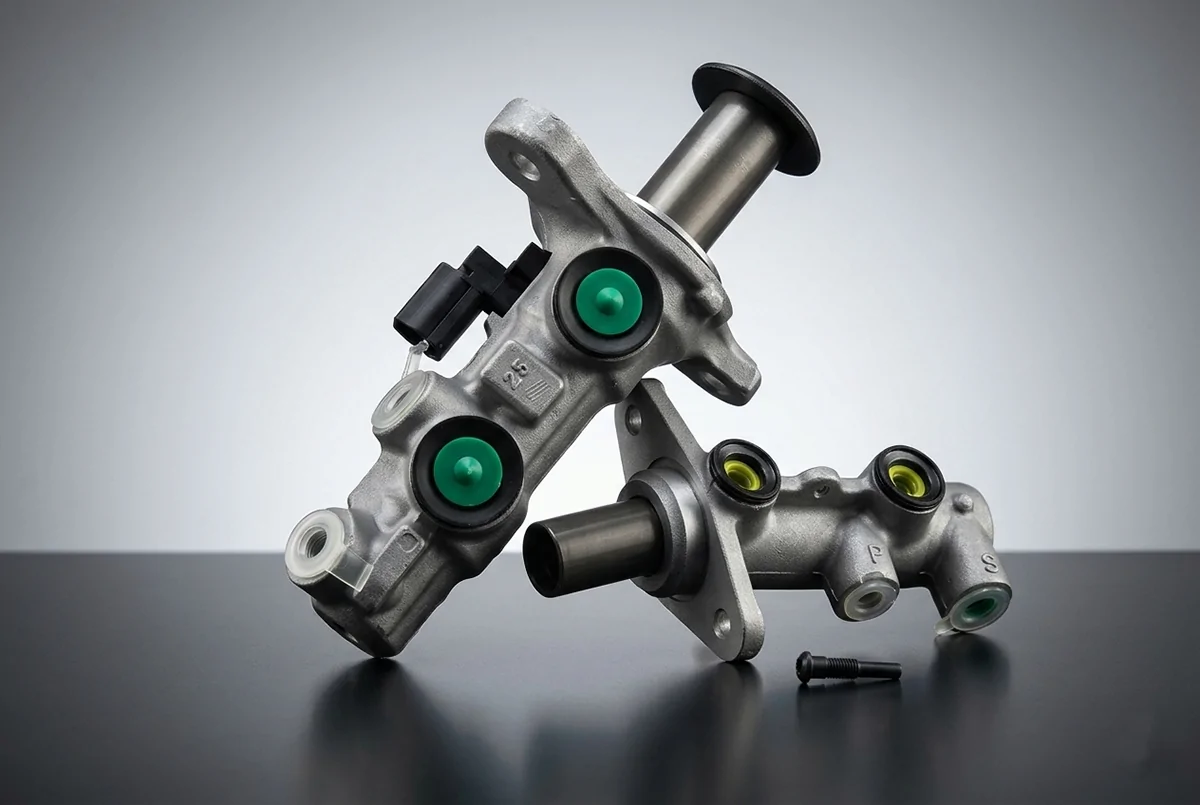
The brake master cylinder — also known as the brake pump — is the component that converts the pressure applied to the brake pedal into hydraulic pressure, distributing it through the circuit to the wheel cylinders (in drum brakes) or the brake calipers (in disc brakes). It is the origin of the entire braking system: if it fails, the rest of the circuit stops functioning, regardless of its condition.
The most common symptoms of a faulty brake master cylinder include a progressive drop in brake fluid level with no visible external leak, a spongy or soft feel on the brake pedal, or the need to pump the pedal to restore pressure.
These symptoms are often initially attributed to other causes, delaying diagnosis. For this reason, the brake master cylinder is a high-turnover part at the workshop once the root cause has been correctly identified.
BSF brake master cylinders are manufactured to specifications equivalent to original equipment, available in aluminium or cast iron body depending on the application, and in single-circuit or tandem versions for vehicles with two independent hydraulic circuits.
The internal seals are made from elastomers compatible with DOT 3, DOT 4 and DOT 5.1 brake fluids, covering virtually all passenger cars and light commercial vehicles in the active vehicle parc.
Our brake master cylinders leave the factory having passed an individual pressure test. This verification minimises the possibility of any BSF brake master cylinder reaching the workshop with a defect that would only become apparent on the road.
BSF brake master cylinders are supplied with all the necessary fitting hardware, eliminating the need to source seal kits separately and reducing intervention time at the workshop.
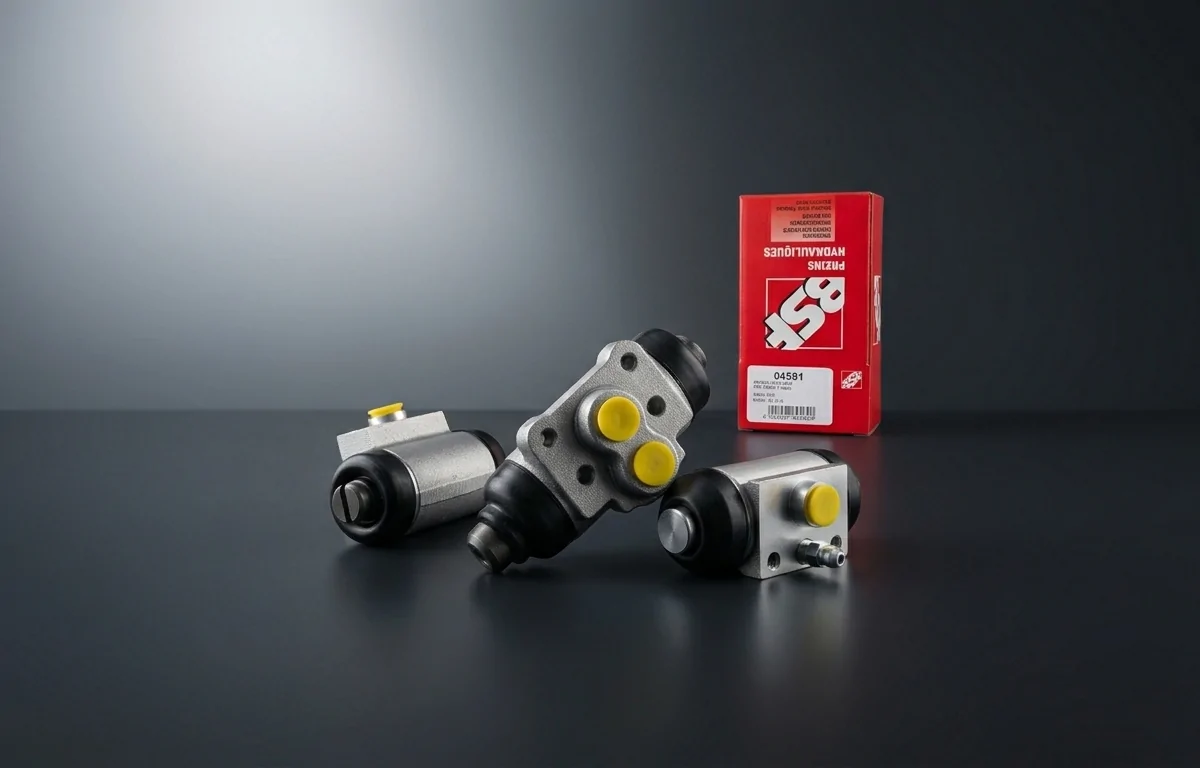
The wheel cylinder is the final actuator of the hydraulic circuit in drum brakes: it receives pressure from the brake master cylinder and converts it into mechanical force to expand the brake shoes against the drum. It is a component subject to severe conditions of temperature, vibration and contamination, and its failure — typically due to seal leakage — directly compromises braking efficiency on that axle.
The BSF wheel cylinder range naturally complements our SUPER-KIT® and TOP-KIT® drum brake kits, allowing the distributor to resolve any drum brake system intervention with a single supplier.
The aluminium bodies in the BSF range reduce component weight and extend service life against corrosion compared to conventional cast iron cylinders. The surface finish is hexavalent chromium-free, complying with European Directive 2000/53/EC.
By working with BSF as a single supplier for the entire drum brake range — brake shoes, spring kits, wheel cylinders and pre-assembled kits — the friction of managing multiple suppliers for the same intervention is eliminated. One single order reference per axle.
The BSF reference selection prioritises the vehicle parc with the highest turnover in the Spanish market, ensuring immediate availability for the most in-demand applications.
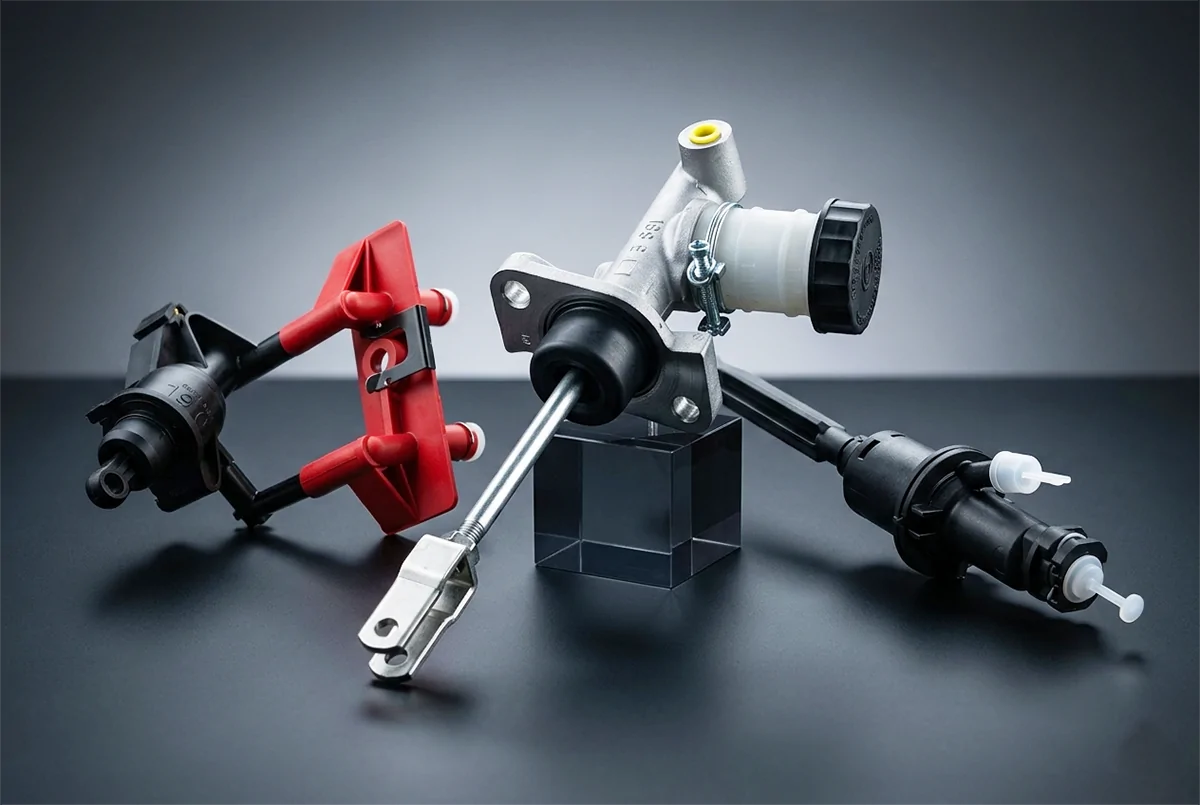
The clutch master cylinder generates the hydraulic pressure that actuates the clutch release mechanism when the driver depresses the clutch pedal. Unlike the brake circuit, it operates at a much higher cycle frequency in urban driving, which accelerates wear of the internal seals. The most common failure symptoms are a spongy clutch pedal feel, difficulty engaging gears, or a drop in fluid level with no visible external leak.
BSF clutch master cylinders are manufactured in steel, aluminium or high-strength technical plastic depending on the application, following the dimensional and material specifications of the original equipment. Seals are selected to ensure prolonged sealing performance against hydraulic clutch fluid across the full working temperature range.
The BSF reference selection prioritises the vehicle parc with the highest turnover in the Spanish market, ensuring immediate availability for the most in-demand applications.
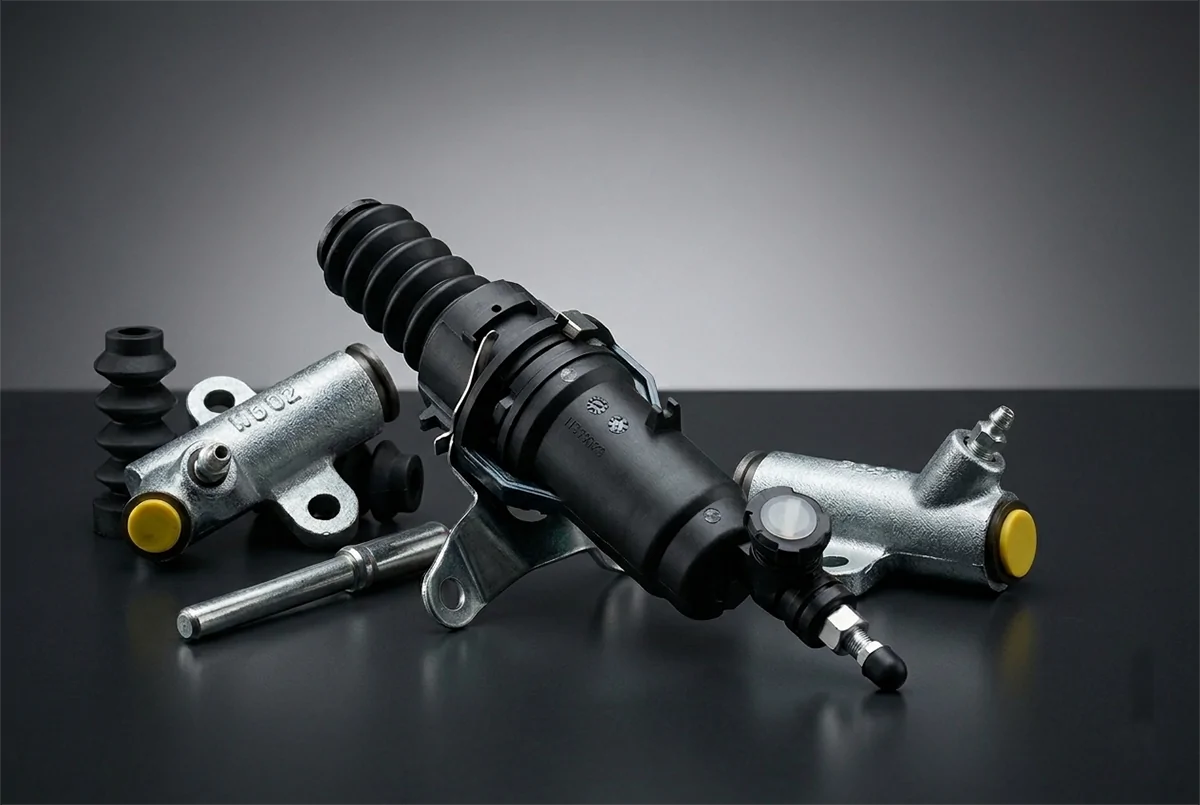
The clutch slave cylinder receives the pressure generated by the clutch master cylinder and converts it into the mechanical displacement that separates the clutch disc from the flywheel. There are two main types depending on the vehicle design: the external slave cylinder, mounted on the gearbox or clutch bracket, and the concentric slave cylinder (CSC), installed directly on the gearbox input shaft.
BSF clutch slave cylinders offer broad vehicle parc coverage, with particular focus on the highest-turnover models in the Spanish market.
Clutch actuation requires tight tolerances: a slave cylinder with incorrect clearances may fail to fully disengage the clutch or do so unevenly, causing difficulty changing gears and premature clutch disc wear. BSF clutch slave cylinders are manufactured to OEM-equivalent specifications to ensure the correct travel and displacement force.
Steel and iron components in the BSF range incorporate a hexavalent chromium-free surface treatment, complying with European environmental regulations and extending the service life of the component under varying humidity and temperature conditions.
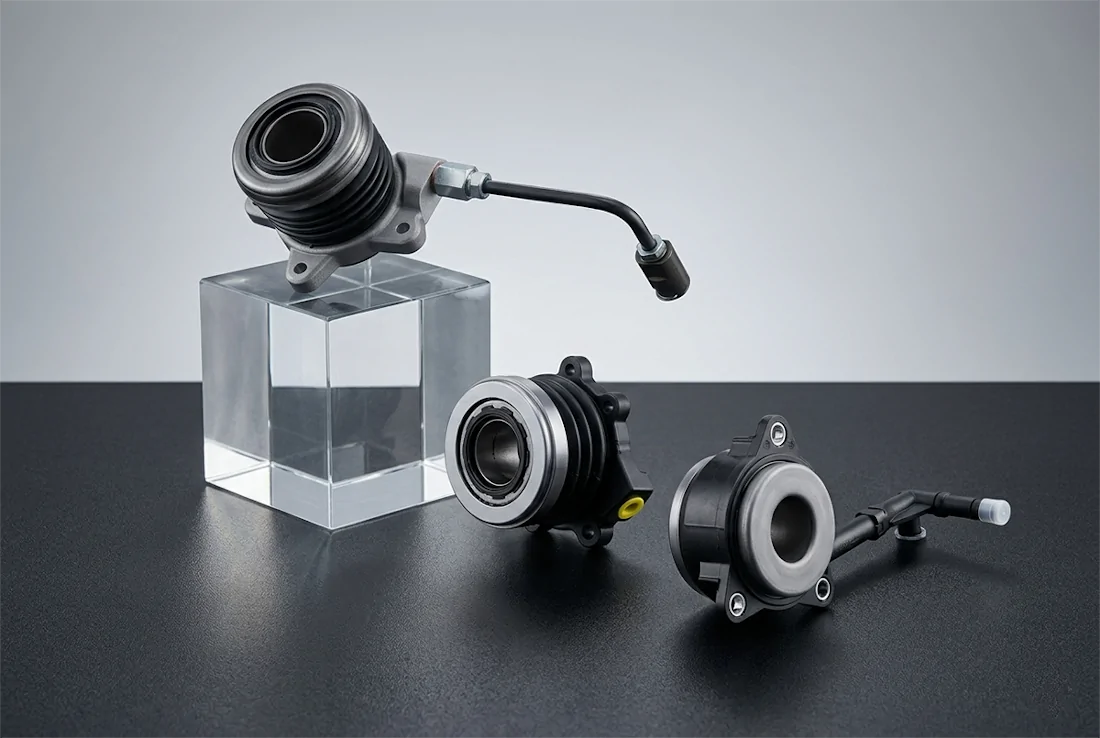
The concentric slave cylinder (CSC) integrates the slave cylinder and the release bearing into a single component. Its location inside the clutch bell housing, mounted concentrically on the gearbox input shaft, makes it the most difficult-to-access element in the entire system.
This characteristic has a direct implication for the workshop and the distributor: when a CSC fails, the intervention requires removing the gearbox. For this reason, recommending its preventive replacement when fitting a clutch kit is not only good practice, but a sound technical decision that avoids a second intervention for the same reason.
The CSC operates continuously with each pedal actuation. When the clutch disc reaches its wear limit, the CSC has accumulated exactly the same number of working cycles. Fitting a new clutch kit while keeping the original CSC is an unnecessary risk: if it fails weeks later, the cost of the second intervention far exceeds the price of the hydraulic release bearing.
BSF CSCs are manufactured with OEM-equivalent materials and bench-tested prior to sale, guaranteeing the sealing integrity of the internal hydraulic circuit and the correct axial displacement of the piston under pressure.
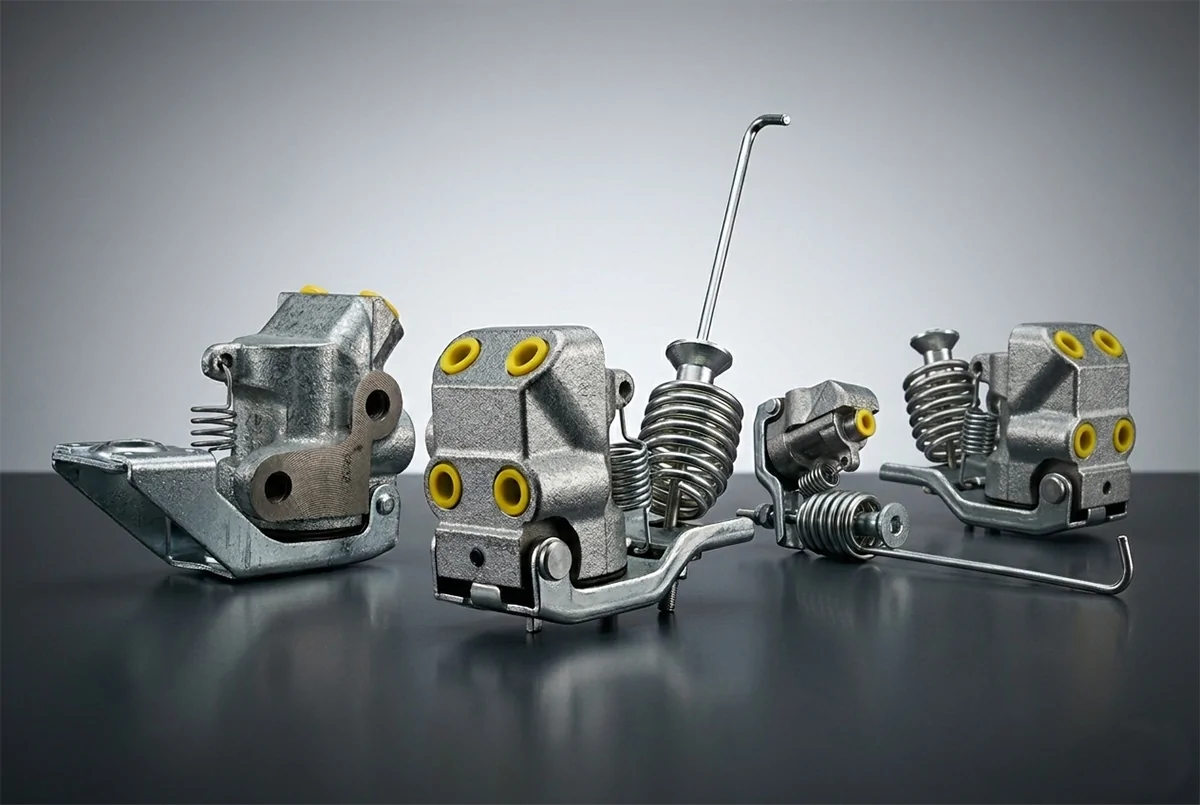
The brake pressure regulator — also known as a proportioning valve or rear brake limiter — is the hydraulic component that regulates the pressure reaching the rear brake circuit according to the vehicle load. Its function is to prevent premature locking of the rear wheels under heavy braking: without this element, an unladen vehicle would brake with the same pressure distribution as a laden one, compromising stability during deceleration.
Although more modern vehicles manage this distribution electronically via systems such as ABS and EBD, a significant portion of the active vehicle parc still incorporates mechanical or hydraulic brake pressure regulators that require periodic replacement.
The range covers the main types present in the vehicle parc: fixed proportional pressure valves, load-sensitive regulators (with a rear axle support spring) and two-way limiters. Coverage focuses on the highest-turnover applications in passenger cars and light commercial vehicles in the Spanish market.
A faulty brake pressure regulator may manifest as premature rear wheel locking, braking imbalance between axles, or — in the event of internal leakage — a progressive loss of pressure in the rear circuit. It is a component rarely identified in a routine brake inspection, which makes preventive replacement especially important when the vehicle presents any of these symptoms.
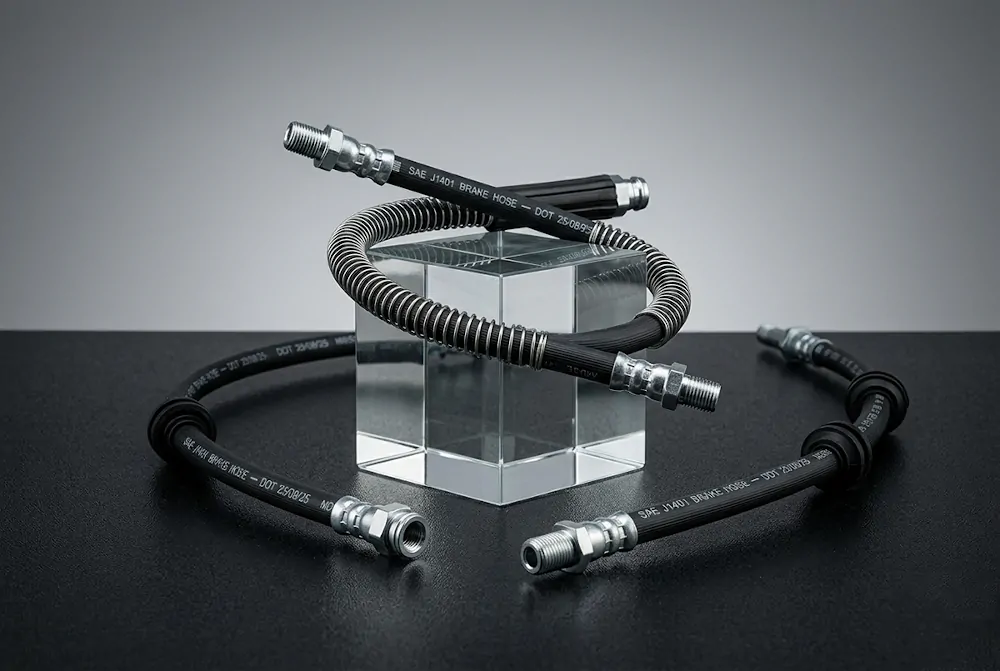
The flexible brake hose is the connection between the rigid hydraulic circuit on the chassis and the brake assembly attached to the wheel, which moves with the suspension and steering. It is subjected to high pressures — typically between 30 and 80 bar, potentially exceeding 100 bar under high-demand braking — as well as continuous cycles of flexing, temperature variation and exposure to external agents. It is the only component in the hydraulic circuit that is in constant movement throughout the vehicle’s service life.
Its condition is critical to pedal feel and braking efficiency: an aged brake hose that expands under pressure absorbs part of the hydraulic energy, resulting in a spongy pedal even when the rest of the system is in perfect condition.
BSF flexible brake hoses incorporate a multi-layer structure combining a DOT-compatible elastomer inner liner, high-strength braided reinforcement and an outer cover resistant to abrasion, fuels and chemical agents. The fittings are protected with an anticorrosion coating to ensure the integrity of the connection throughout the component’s service life.
The quality of a brake hose is largely measured by its volumetric expansion under pressure: the lower the expansion, the firmer the pedal feel and the more direct the brake response. BSF brake hoses comply with the volumetric expansion requirements set by European regulations, ensuring a direct hydraulic response and a firm pedal.
Visual inspection at every service is recommended, along with preventive replacement every 5 years or 80,000 km, regardless of apparent condition. Surface cracking, bulging under pressure or any sign of moisture on the outer cover are unequivocal indicators for immediate replacement. In many cases, a deteriorated brake hose is the actual cause of a soft brake pedal that the workshop has attempted to resolve by bleeding the circuit without success.
The BSF brake hose range covers passenger cars and light commercial vehicles with particular emphasis on the most active vehicle parc in the Spanish market. Applications for the main European, Asian and American manufacturers with significant presence in the national vehicle parc are included.
Brake system specialists since 1986
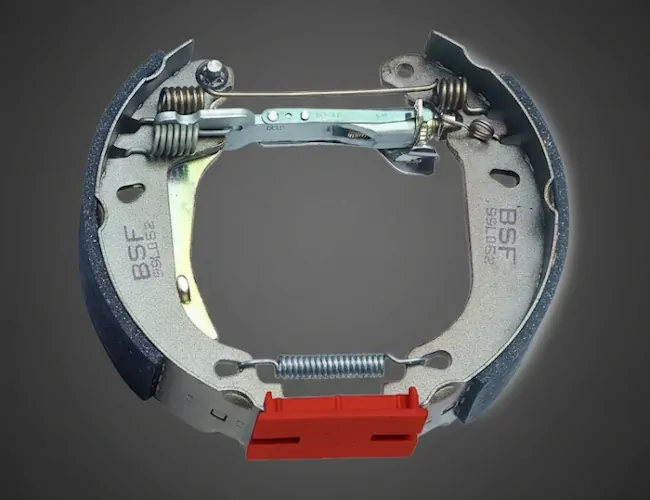
SUPER-KIT® (brake kit), TOP-KIT® (pre-assembled brake kit), HB-KIT® (handbrake shoe kit) and brake shoes.
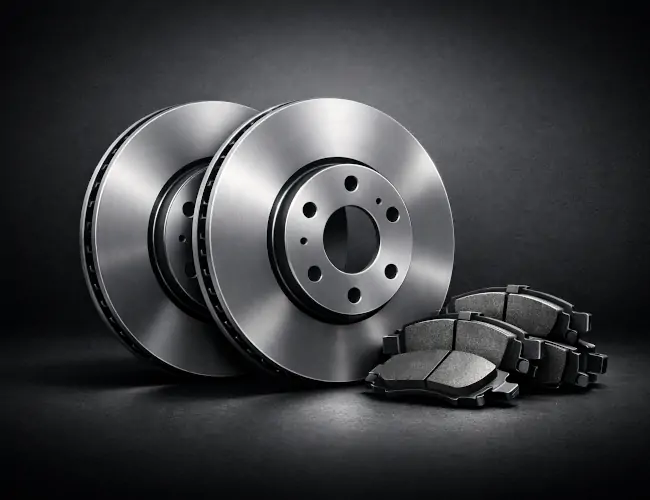
Brake pads and brake discs, SUPER high-friction discs, SUPER-PAD® (disc + pad kit) and wear indicators.
Find it here — search by make, model, year or OE reference