
BSF wheel cylinders manufactured to original equipment standards for the professional aftermarket. We supply a complete range of hydraulic components for drum brake systems in passenger cars and light commercial vehicles, offering distributors and parts dealers optimum stock availability, high turnover and full logistics coverage.
▶ BSF Automoción brand · ISO 9001:2015 · 24h delivery
Available B2B channel · 24h delivery · 40+ years supplying the aftermarket
What is a wheel cylinder?
The wheel cylinder — also known as the brake cylinder — is the hydraulic actuator of the drum brake. It receives the hydraulic pressure generated by the brake master cylinder and converts it into mechanical movement, pushing the brake shoes against the inside of the brake drum to generate braking force. It is located inside the drum, at each rear wheel — and at all wheels in vehicles fitted exclusively with drum brakes.
Without the wheel cylinders in correct condition, the brake shoes cannot exert pressure on the brake drum. Even a minor hydraulic fluid leak or piston seizure will seriously compromise braking efficiency. It is a safety-critical component whose replacement admits no delays or partial solutions.
The tandem master cylinder generates the hydraulic pressure distributed independently to each wheel cylinder. In a diagonal or parallel split circuit system, if one circuit fails, the tandem master cylinder ensures that at least two opposing wheel cylinders continue to receive pressure, maintaining a minimum safe braking capacity.
¿Qué es un cilindro de rueda?
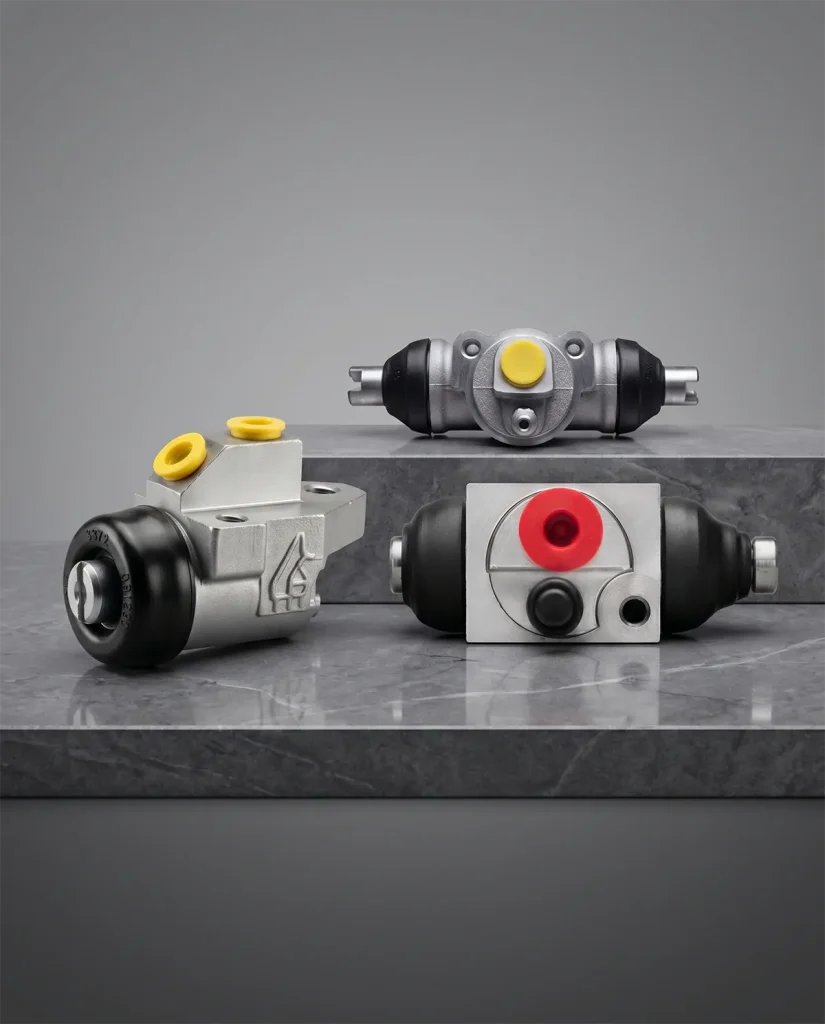
Types of wheel cylinder
Wheel cylinders are classified by the number of pistons and the actuation mechanism. The correct part number depends on the drum brake configuration, the piston diameter and the specific vehicle application.
The most common type of wheel cylinder in drum brakes, with two opposing pistons each pushing a brake shoe in opposite directions. Mounted at the top of the drum brake assembly.
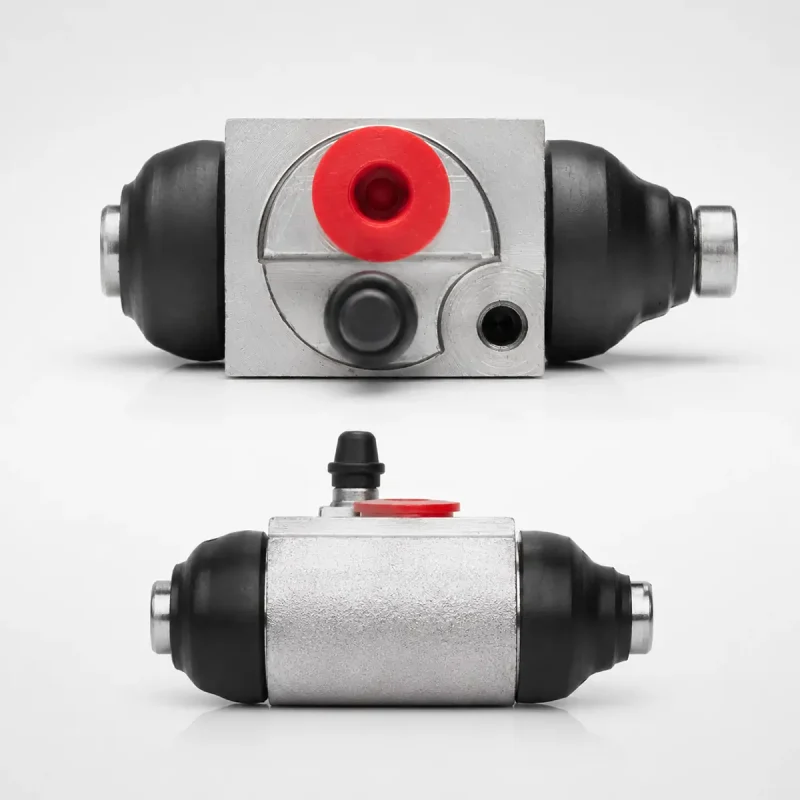
A single piston acts on one brake shoe, while the other rests against a fixed point on the assembly. A straightforward configuration used in certain drum brake systems.
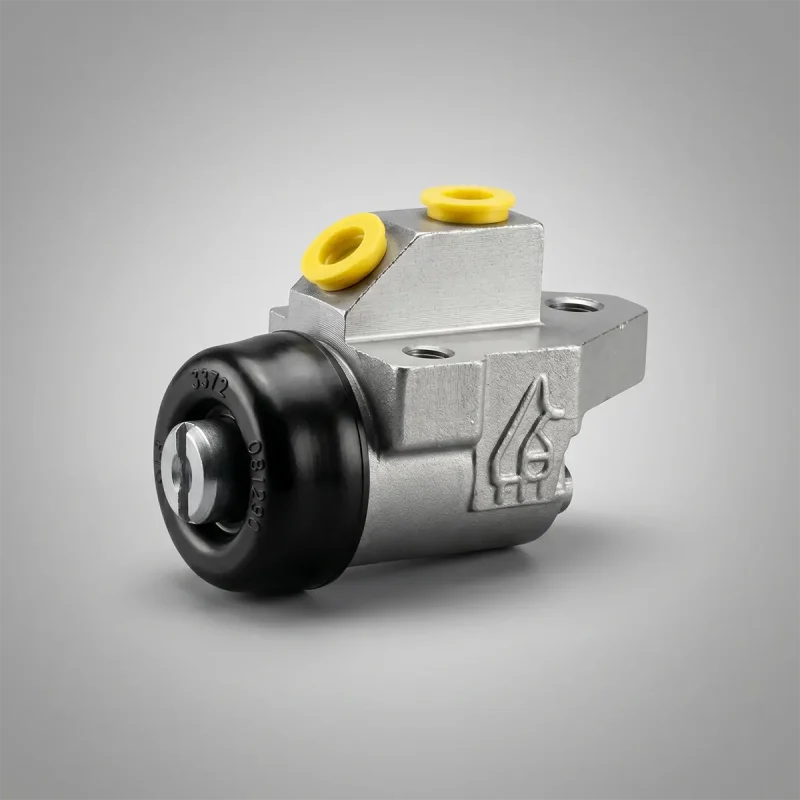
Light commercial vehicles typically use wheel cylinders with larger-diameter pistons, required to handle the higher hydraulic pressures of vans and light commercial vehicles. The body is manufactured in reinforced cast iron to guarantee greater strength and durability.
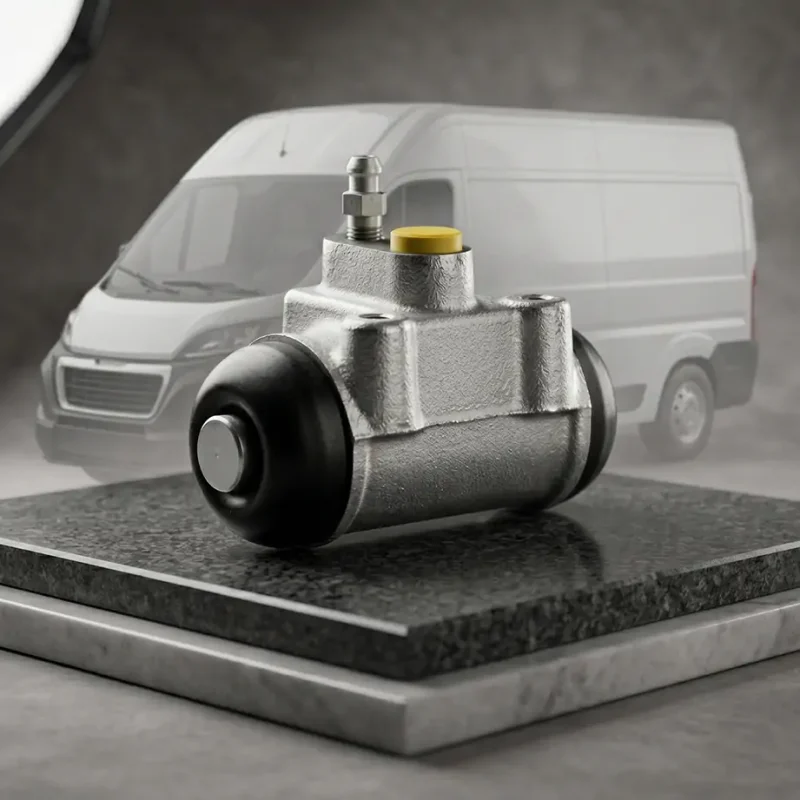
The wheel cylinder with integrated brake pressure regulator (CRCI) combines the cylinder and the brake pressure regulator in a single unit, automatically balancing pressure between axles. Found in Citroën, Peugeot and Renault passenger cars, its replacement requires full brake bleeding to prevent blockage of the internal micro-channels.
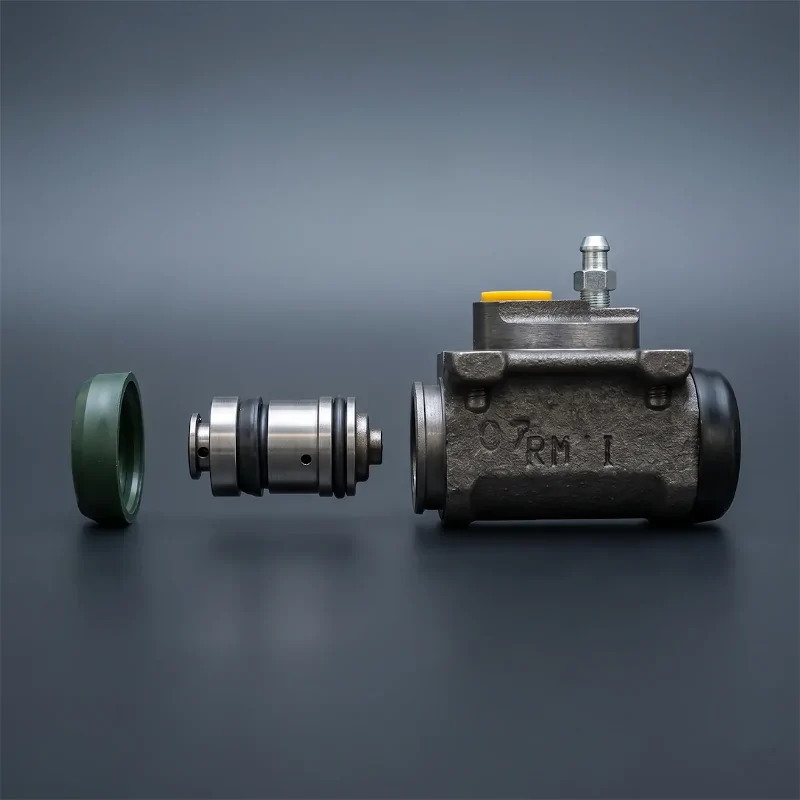
El cilindro de freno trabaja en condiciones exigentes y está sujeto a desgaste con el tiempo. Estos son los síntomas más habituales que indican la necesidad de sustitución inmediata.
Signs of Failure
Visible brake fluid leak inside the brake drum or on the brake shoe
Brake shoes soaked in hydraulic fluid with severe reduction in friction force
Spongy brake pedal or excessive pedal travel at the rear axle
Uneven braking: vehicle pulling to one side under braking
Brake system warning light illuminated on the dashboard
Seized piston not returning: brake dragging with pedal released
Visible corrosion on the cylinder body when the brake drum is removed
Brake fluid reservoir level dropping with no visible external leak
BSF has the complete kit for your vehicle: wheel cylinder + brake shoes + springs, all in one order with OEM quality guarantee.
✓ BSF wheel cylinders
✓ Brake shoes included
✓ Springs and fitting hardware
✓ 900+ part numbers
Technical Specifications
Wheel cylinders manufactured to OEM quality criteria, ISO 9001:2015 certified, hexavalent chromium-free (Cr+6) and compatible with the main applications in the European vehicle parc.
| Body material | Cast iron or aluminium depending on application. |
| Pistons | Treated steel or anodised aluminium. Sealed with EPDM rubber cups, compatible with DOT 3, DOT 4 and DOT 5.1 brake fluid. |
| Piston diameter | From 14.28 mm to 32 mm depending on application and axle. |
| Configuración | Doble pistón o pistón único. Con o sin corrector incorporado. |
| Hydraulic connection | Rosca M10×1 o M12×1. Válvula de purga incluida. |
| Surface treatment | Libre de cromo hexavalente (Cr+6). Cumple directiva EU ELV. |
| Certification | ISO 9001:2015 (LRQA LRQA). |
| Application | Eje trasero en turismos y compactos. Ambos ejes en vehículos comerciales ligeros. |
Brand Compatibility:
Why Choose BSF Automotive
Exclusive brake specialisation, guaranteed stock and certified quality since 1986. This is what sets BSF Automoción apart as the reference supplier for the Spanish professional aftermarket.
Deep technical expertise and a complete range for the professional aftermarket, with no gaps and no distraction from other product categories.
Average service level of 97%. Back orders below 3%. Distributors can commit to their workshops without relying on uncertain lead times or second-choice alternatives.
Quality management system certified by LRQA. At BSF we apply integrated logistics: all our departments share information and work in a coordinated manner under the same standards — an internal mechanism that guarantees our distributors an agile, consistent and error-free response on every order.
Warning: When a wheel cylinder loses its seal, brake fluid contaminates the brake shoes. A brake shoe soaked in hydraulic fluid loses up to 80% of its friction coefficient and must be replaced together with the cylinder. Correct replacement always means changing both the cylinder and the brake shoes on the same axle.
BSF does not sell to garages or end consumers. The distributor has exclusive access to the channel and does not compete with its supplier in the market.
Frequently Asked Questions
Technical answers for distributors, workshops and aftermarket professionals on the replacement, diagnosis and compatibility of BSF wheel cylinders.
They are the same component under different names. ‘Wheel cylinder’ is the standard technical term; ‘brake cylinder’ is common in the Spanish aftermarket; ‘bombín’ is the colloquial term. All three refer to exactly the same component: the hydraulic actuator of the drum brake.
Yes, whenever the wheel cylinder has suffered a leak. Brake fluid soaks into the brake shoes and irreversibly destroys the friction material. A contaminated brake shoe can lose up to 80% of its braking capacity. Correct intervention requires replacing both the cylinder and the brake shoes on the same axle, and cleaning or replacing the brake drum if contaminated.
Yes, it is essential. Removing the wheel cylinder breaks the circuit seal and allows air to enter. Air is compressible, and air bubbles produce a spongy brake pedal and drastically reduce braking pressure. Brake bleeding must be carried out with the new cylinder fitted, from the wheel furthest from the master cylinder to the nearest.
Technically possible on some models. However, in the professional aftermarket the standard practice is complete replacement. Wheel cylinders are low unit-cost components, and the labour time to repair the original exceeds the price of a new one. BSF supplies complete wheel cylinders ready for direct fitting.
Whenever the brake drum is removed to replace the brake shoes. This is the opportunity to inspect the wheel cylinder: look for signs of moisture, check the rubber dust boots and verify the pistons move freely. If the cylinder has covered more than 80,000 km or 5 years, preventive replacement is recommended.
A kit groups everything needed in a single part number: wheel cylinder, brake shoes and springs. It eliminates the risk of an incomplete repair and simplifies the order. BSF offers two solutions: the SUPER-KIT®, with all components ready to fit, and the TOP-KIT®, in a pre-assembled version to reduce workshop time.
BSF wheel cylinders are available exclusively to distributors, warehouses and distribution groups in the aftermarket channel. Request access to our catalogue and B2B commercial terms with no obligation.
Available B2B channel · Not sold to garages or end consumers · Direct commercial support